

Small businesses can now compete effectively with larger companies through strategic digital marketing. Unlike traditional advertising, digital marketing offers cost-effective approaches that deliver measurable results. Here are ten proven digital marketing strategies that actually work for small businesses:
1. Google Business Profile
Setting up a Google Business Profile (formerly Google My Business) puts your business front and center when potential customers search for your products or services. This free tool helps manage your online presence across Google Search and Maps, creating a digital storefront that displays your contact information, business hours, and location. Additionally, this platform allows you to share updates about special offers and collect valuable customer reviews. Having positive reviews significantly improves conversion rates, as they build trust with potential customers.
2. Search Engine Optimization (SEO)
SEO remains fundamental for small business visibility online. According to research, of all website traffic organic search drives 53%[1]. Effective SEO involves several key components:
- Keyword research to identify terms your target audience uses
- On-page optimization of website content
- Regular publishing of keyword-rich blog posts
- Link building strategies to improve domain authority
- Mobile optimization for better user experience
For local businesses, optimizing for local search terms can quickly generate qualified leads from nearby customers actively looking for your services.
3. Strategic Social Media Marketing
Social media platforms offer unique opportunities for businesses to connect with their target audience. According to research, 68% of consumers agree that social media is a viable tool for interacting with businesses [2]. Rather than trying to maintain a presence on every platform, select two or three channels where your audience is most active. Consistency is crucial—regular posting and authentic engagement foster community and loyalty. Features like Instagram Stories or Facebook Live enhance real-time interactions with your audience.
4. Content Marketing
Content is indeed the soul of digital marketing. According to HubSpot, businesses that blog consistently receive 55% more website visitors[1]. Focus on creating valuable, relevant content that addresses your customers’ pain points and questions. This approach positions your business as an authority while improving search rankings. Content formats can include blog posts, videos, podcasts, webinars, and infographics—each serving different audience preferences and consumption habits.
5. Email Marketing
Despite being one of the oldest digital marketing channels, email marketing remains highly effective. Studies show emails are 40 times more effective in acquiring new customers compared to platforms like Facebook and Twitter combined [2]. Furthermore, email marketing delivers an impressive ROI of ₹3,037.70 for every ₹84.38 spent [2], making it the most lucrative digital marketing channel. Build your email list organically and segment your audience to deliver personalized content that resonates with different customer groups.
6. Pay-Per-Click (PPC) Advertising
PPC campaigns through platforms like Google Ads offer immediate visibility and targeted traffic. Unlike organic strategies that take time, PPC can drive traffic within hours of launch [1]. Success in PPC advertising requires careful keyword research, compelling ad copy, strategic bidding, and optimized landing pages. Regular monitoring and adjustment of campaigns are essential for maximizing return on investment.
7. Influencer Marketing
Partnering with relevant influencers—individuals with engaged followings in your industry—can significantly extend your reach. This strategy works particularly well for product-based businesses, as audiences trust recommendations from figures they follow. Start with micro-influencers in your niche, who often have highly engaged audiences despite smaller follower counts. Their endorsements typically generate higher conversion rates at more affordable costs.
8. Analytics and Performance Tracking
Effective digital marketing requires ongoing measurement and refinement. Implement analytics tools to track key performance metrics across all channels. Social media platforms offer valuable insights into audience behavior and content performance through engagement rates, click-through rates, and demographic data [1]. This data-driven approach allows small businesses to allocate resources to strategies that deliver the best results.
These digital marketing strategies help small businesses build online visibility, establish credibility, and convert digital reach into actual customers. Through thoughtful implementation and consistent effort, even businesses with limited resources can achieve significant growth in the digital marketplace.
9. AI-Powered Marketing
AI-powered marketing helps businesses understand customer behavior more accurately.It uses data to predict trends and optimize campaigns in real time.Marketers can automate tasks while improving targeting and personalization.AI tools help deliver the right message to the right audience faster.This results in better engagement, higher conversions, and improved ROI. Overall, AI makes marketing smarter, faster, and more effective.
10. Brand Shoots
Brand shoots play a key role in building a strong visual identity.High-quality visuals help brands create trust and recognition.Well-planned shoots communicate brand values clearly and consistently.They enhance marketing campaigns across websites, ads, and social media.
Professional brand shoots make content more engaging and memorable.Strong visuals help brands stand out in a competitive market.
Understanding Digital Marketing for Small Businesses
What digital marketing really means today
Digital marketing has evolved beyond simply maintaining a website or posting occasionally on social media. Today, it encompasses an integrated approach to reaching customers through various online channels where they spend their time.
For small businesses, digital marketing means utilizing web platforms, search engines, social media, email, and other digital channels to connect with potential customers in meaningful ways. It involves creating engaging content, building an online presence, and using data to make informed decisions about marketing efforts.
now leverage AI tools to enhance their marketing strategies and reach new customers Over 60% of small companies[3]. This technological shift enables even the smallest enterprises to analyze customer data, predict behaviors, and generate targeted content with remarkable precision.
Modern digital marketing focuses on building personalized experiences. The brands succeeding today create deeply personal interactions that make customers feel recognized in every digital touchpoint [3]. This approach has become possible through advanced technologies that enable unprecedented levels of customer understanding.
Why it’s essential for small businesses
As we move toward 2026, digital marketing has become non-negotiable for small businesses hoping to survive and remain competitive [4]. The digital landscape offers a level playing field where smaller enterprises can effectively compete with larger companies through strategic approaches.
First, digital marketing provides direct access to global markets without geographical limitations. Unlike traditional marketing approaches, online channels allow businesses to expand beyond local boundaries and tap into regional or international audiences [5].
Research shows look up information about local businesses online at least once a day nearly a third of Americans[3]. Moreover, approximately 76% of consumers research a company online before visiting a physical store [6]. Without a strong digital presence, small businesses miss connecting with this massive pool of potential customers actively searching for their products or services.
Another critical advantage is the ability to track performance in real-time. Analytics tools provide insights into various metrics, including website traffic, conversion rates, and engagement levels [7]. This data empowers small businesses to make informed decisions, optimize strategies, and allocate resources to the most effective channels.
Budget-friendly nature
Perhaps one of the most compelling aspects of digital marketing for small businesses is its cost-effectiveness. Traditional marketing methods like print advertisements, billboards, and TV commercials typically require substantial financial investments—often beyond the reach of smaller enterprises with limited budgets.
The data speaks for itself—email marketing sees an average ROI of INR 3543.98 for every INR 84.38 invested [3]. This makes it one of the most lucrative digital marketing channels available to small businesses today.
For businesses operating with tight budgets, digital marketing provides several cost advantages:
- Controlled spending: Platforms like Google Ads and social media advertising allow businesses to set specific budgets and adjust campaigns in real-time based on performance [8].
- Pay-per-click models: With PPC marketing, businesses only pay when potential customers actually click on their advertisements [9].
- Free or low-cost options: Many digital channels offer free basic plans or low-cost entry points, making them accessible to businesses of all sizes [8].
The budget-friendly nature of digital marketing is especially relevant considering that research shows the average small business spends just 1% of its revenue on advertising [5]. This modest investment can yield significant results when directed toward strategic digital channels.
Even with limited resources, small businesses can implement effective digital marketing through strategies like:
- Optimizing Google Business Profiles to improve local search visibility
- Creating valuable content that addresses customer pain points
- Building email lists to nurture relationships with potential customers
- Leveraging social media platforms where target audiences are active
- Using analytics to identify the most effective channels for investment
By focusing on these cost-effective approaches, small businesses can maximize their marketing impact without stretching their budgets beyond sustainable limits.
Why a Unified Digital Marketing Approach Works Better
In today’s complex digital landscape, a fragmented approach to marketing rarely delivers optimal results. Small businesses that implement a unified digital marketing strategy create a seamless experience for customers while maximizing their limited resources. This integrated approach ensures all marketing channels work in harmony rather than competing for attention.
Digital marketing as a connected system
Integrated digital marketing is a comprehensive approach that creates a unified and seamless consumer experience across various marketing channels [2]. Unlike traditional methods where different marketing initiatives operate independently, a connected system ensures all communications, messages, and branding remain consistent and complementary.
For small businesses, this cohesive approach delivers several advantages:
- Enhanced brand recognition: When your brand is consistently presented across all customer touchpoints, recognition improves substantially [2]. This consistency helps build familiarity with potential customers regardless of where they encounter your business.
- Stronger trust and credibility: Cohesive messaging across multiple channels strengthens your brand identity. Customers begin recognizing your brand easily whether they’re scrolling through social media, reading your blog, or receiving an email [2]. This consistent presence establishes trust that fragmented approaches simply cannot achieve.
Fundamentally, a unified approach treats digital marketing as an interconnected ecosystem rather than isolated tactics. Research indicates that businesses implementing integrated strategies see because customers encounter a consistent brand voice regardless of the platform higher engagement rates[10].
How channels support each other
The power of unified digital marketing lies in how different channels amplify each other’s impact. Instead of working in isolation, each channel contributes to a collective strategy with greater overall effectiveness.
Consider these examples of channel synergy:
Search and display advertising work together effectively when someone searches for your product but doesn’t convert immediately. Follow-up display ads can re-engage them during their decision-making phase, leading to than running search campaigns alone better conversion rates[5].
Similarly, aligning email campaigns with social media posts extends your reach and strengthens your message. When you share consistent themes across platforms, engagement increases and provides valuable insights for refining your email targeting [5].
This cross-channel approach creates a multiplier effect where the combined impact exceeds what individual channels could achieve separately. For instance, a customer might discover your small business through a social media post, recognize your brand later in a search ad, and finally convert after receiving a targeted email [5]. This coordinated journey moves prospects more efficiently toward a purchase decision.
One of the most practical benefits for resource-conscious small businesses is content repurposing. A unified marketing approach allows you to adapt the same content across different channels, saving both time and money while maintaining consistent messaging [2]. For example, a blog post can be transformed into a newsletter, a series of social media updates, and even fuel SEO efforts—all under one aligned message [10].
Avoiding random marketing efforts
Random, disconnected marketing efforts often lead to wasted resources and diminished results. Without coordination, each channel operates in isolation, potentially sending mixed messages that confuse your audience and dilute your brand’s impact [11].
A fragmented approach makes it exceptionally difficult to:
- Track performance holistically: When channels operate independently, it becomes challenging to determine which efforts are driving results and which are not [11]. A unified approach provides clearer insights into how your marketing activities collectively contribute to business goals.
- Allocate resources effectively: Disjointed efforts waste budget and time [10]. By consolidating your marketing activities under a coherent strategy, you can direct resources toward channels that work together most effectively.
- Adapt quickly to changes: Market conditions and consumer behaviors constantly evolve. An integrated marketing strategy allows your business to pivot quickly without losing your brand voice or strategic focus [10].
In contrast, businesses with unified marketing strategies can quickly identify what’s working across all channels, adjust their approach based on comprehensive data, and maintain a consistent brand presence even as they adapt to new opportunities.
For small businesses operating with limited resources, this efficiency is particularly valuable. A unified approach ensures every marketing dollar contributes to a cohesive strategy rather than being scattered across disconnected initiatives.
Building Online Visibility and Brand Credibility
In the digital realm, visibility and credibility form the cornerstone of successful small business marketing. Research reveals that will only consider buying from a business if they trust the brand 81% of consumers[12]. Consequently, establishing a strong online presence isn’t just about being seen—it’s about being trusted.
Being visible where customers search
For small businesses, appearing in the right places at the right time is crucial. Nearly 80% of consumers search online for local businesses weekly [13], underscoring the necessity of strategic online visibility.
Search engine visibility directly correlates with perceived credibility. Websites ranking on Google’s first page automatically gain trustworthiness in consumers’ eyes [14]. In fact, search engines favor high-quality, valuable content, rewarding brands that provide helpful resources.
To enhance your online visibility:
- Claim and optimize your Google Business Profile – This free listing appears on Google Search and Maps, creating a digital storefront that displays your contact information, hours, and location [6]
- Implement local SEO strategies – Use location-based keywords in your content to enhance search rankings for local customers [8]
- Share valuable industry information – Businesses that consistently publish helpful content see significantly higher website traffic [7]
- Ensure mobile optimization – With performed on mobile devices, a mobile-friendly website is essential 60% of internet searches[15]
As well as boosting visibility, these practices build what experts call “digital trust”—the confidence consumers have in your ability to deliver on promises and provide reliable products or services [16].
Trust through content, reviews, and presence
Building trust requires multiple touchpoints that consistently reinforce your brand’s reliability. Initially, establishing clear data governance and transparency reassures customers that their information is handled responsibly [12].
Reviews have become perhaps the most powerful trust signals. Consider these statistics:
- 88% of consumers trust online reviews as much as personal recommendations [17]
- 85% of consumers read up to 10 reviews before making purchase decisions [17]
- 93% of shoppers look at reviews before buying anything [18]
- A one-star increase in ratings can lead up to a 9% increase in revenue [18]
Beyond mere collection, actively engaging with reviews demonstrates commitment to customer satisfaction. Responding to both positive and negative feedback shows responsibility and strengthens brand reliability [19]. Primarily, negative reviews require careful, constructive responses—45% of consumers are more likely to visit a business that responds to negative reviews [20].
User-generated content serves as powerful social proof. Encouraging customers to share experiences with your products creates authenticity and builds trust [21]. Marketing campaigns featuring user-generated content result in 29% higher conversions than campaigns without it [15].
Long-term brand value
Establishing digital trust yields dividends far beyond immediate sales. Organizations that prioritize trust position themselves to innovate, attract top talent, and maintain positive reputations [12].
Trust fosters loyalty among consumers. When customers trust a brand, they become repeat buyers and advocates, driving long-term profitability [16]. In addition, brands with established digital trust are better equipped to weather crises and controversies [16].
For small businesses specifically, long-term brand value emerges from:
- Consistent branding – When your brand is presented consistently across all customer touchpoints, recognition improves substantially
- Ethical practices – PWC Consumer Insights Survey found that a company’s commitment to ethical values directly impacts credibility [22]
- Transparent communication – Open and honest communication is appreciated by consumers, leading to long-term credibility [23]
The payoff is significant—businesses that focus on authentic content and customer engagement see 20% higher conversion rates than those that don’t [14].
Hence, building online visibility and brand credibility isn’t just about short-term gains. It’s about creating an enduring foundation of trust that supports sustainable growth through each stage of your digital marketing journey.
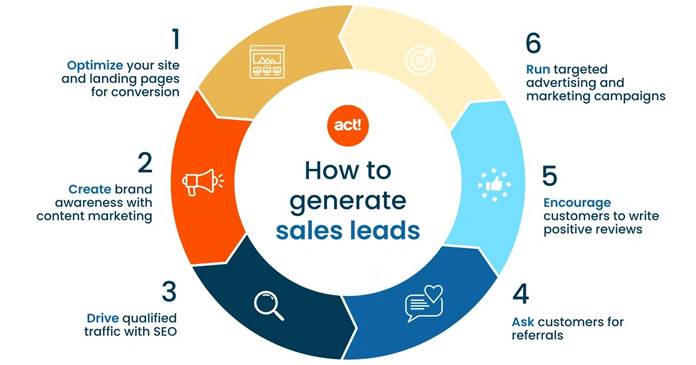
Generating visibility is only the first step in effective digital marketing for small businesses. The true challenge comes in converting that digital reach into paying customers. Even businesses with substantial website traffic often struggle to turn visitors into leads and sales.
Traffic vs leads vs sales
Driving traffic to your website is meaningless unless visitors take desired actions. Studies show a website without filling out a form or completing a purchase 98% of online traffic leaves[24]. This represents missed opportunities to build relationships with potential customers.
Understanding the difference between these metrics is crucial:
- Traffic represents potential – website visitors exploring your offerings
- Leads indicate interest – prospects who’ve shared contact information
- Sales deliver revenue – customers who’ve completed purchases
The marketing funnel captures this progression, with visitors entering at the top (awareness), moving through consideration (leads), and finally reaching conversion (sales). Each stage requires different tactics and messaging.
At the consideration stage, potential customers are actively researching solutions. Effective strategies include offering detailed product demos, comparison guides, and targeted emails. of all revenue Segmented email campaigns generate 58%[3], while retargeting ads can boost conversion rates by 26% [3].
Importance of clear messaging
Clear, persuasive messaging directly impacts conversion rates. CityCliq increased its click-through rate by 90% simply by testing different positioning messages on its homepage [24]. Effective messaging answers the fundamental question customers ask: “Why should I care?”
Small businesses should prioritize:
- Personalization – Tailor messages based on visitor behavior and preferences
- Value proposition clarity – Explain benefits clearly without jargon
- Trust signals – Display testimonials, customer logos, and security badges
- Strong calls-to-action – Use clear CTAs like “Start Your Free Trial” instead of vague phrases [4]
User experience and follow-ups
The quality of user experience directly influences conversion rates. Studies reveal that a mere one-second delay in page load time can reduce conversions by 7% [26]. Therefore, optimizing website speed should be a priority for small businesses seeking to maximize conversions.
Simplifying the conversion process is equally important. Forms with fewer fields perform better—removing just one form field can boost conversions by up to 26% [27]. Similarly, streamlining the checkout process helps more people complete their purchases [3].
Live chat has emerged as a powerful conversion tool. Nearly 77% of customers report queries being answered satisfactorily immediately through live chat [28]. This capability increases conversion rates as it:
- Allows potential customers to ask pre-purchase questions
- Builds confidence, especially for higher-priced items
- Signals availability of support if issues arise
- Creates deeper customer relationships through personalized interaction
After initial contact, follow-up strategies become vital. Following up within five minutes of receiving a lead increases conversion chances dramatically [29]. Implementing a sequence of 2-3 follow-ups at minimum is recommended, as most sales require at least five follow-ups, yet many businesses stop after just two attempts [29].
Effective follow-up communication should provide value with each interaction rather than merely “checking in.” Offering helpful guides, relevant testimonials, or transparent pricing information builds trust and keeps your brand top-of-mind when customers are ready to make decisions [30].
For small businesses utilizing digital marketing strategies, converting digital reach into real customers requires understanding the journey from traffic to sales, crafting clear messages that resonate, and creating frictionless experiences followed by thoughtful engagement.
Maintaining Consistency Across Digital Channels
Consistency forms the backbone of successful digital marketing for small businesses. After establishing your online presence and converting visitors, maintaining a unified approach across all digital touchpoints becomes essential for long-term success.
Consistent branding
Brand consistency builds trust—a critical factor considering that 81% of consumers need to trust a brand before making a purchase [9]. This trust isn’t achieved through random logo placements or occasional taglines, yet through creating a cohesive experience across all platforms.
What does consistent branding include? Primarily:
- Visual identity: Uniform use of logos, colors, fonts, and design elements across all digital channels
- Messaging: Aligned tone of voice and core values in all communications
- User experience: Similar feel and functionality regardless of platform
Small businesses that maintain visual consistency see substantial benefits. Research shows consistent use of visual elements like logos, colors, and fonts can improve brand recognition by up to 80% [31]. This recognition subsequently encourages customers to engage more with your brand.
Regular activity
Consistency isn’t just about how your brand looks—it’s about maintaining regular presence. Building your brand on social platforms is essentially about posting regularly, linking to your website, and maintaining clear messaging across all social media channels [32].
Regular digital activity establishes reliability. When customers see consistent updates across your channels, they perceive your business as active, engaged, and trustworthy. Conversely, sporadic activity creates doubt about your operational status.
Long-term impact over shortcuts
Although the digital marketing environment feels like a whirlwind of constant change, chasing trends or implementing “random acts of marketing” undermines long-term success [33]. Notably, a study quoted by Forbes demonstrates that consistent brand presentation across platforms can boost revenue by up to 23% [31].
Short-term thinking generally leads to:
- Inconsistent brand messaging that confuses your audience
- Over-reliance on paid advertising versus sustainable organic growth
- Sacrificing brand identity for momentary trends
Alternatively, adopting a long-term vision helps establish brand authority and build customer loyalty. This approach creates a foundation for consistent, scalable growth [33]. Although some digital marketing methods take time, they ultimately prove vital for becoming a successful online business [32].
Combining short-term tactics with long-term strategies provides the optimal approach. Use short-term strategies for quick wins and conversions while simultaneously building toward long-term goals [32]. For instance, pairing paid advertisements with organic methods builds awareness about your brand and products while working toward sustainable visibility.
Measuring Performance and Scaling Growth
Effective digital marketing demands data-driven decisions rather than guesswork. Small businesses that track and analyze their marketing performance gain valuable insights to refine strategies and maximize their limited resources.
Tracking results
Data analytics transforms marketing from abstract concepts into measurable outcomes. Google Analytics offers powerful capabilities for monitoring website performance—tracking bounce rates, traffic sources, and conversion rates to reveal what’s working [34]. For social media, focus on engagement, reach, and conversion metrics to optimize content strategies [34]
Learning what works
Primarily, data-driven marketing enables optimization for better results and increased return on investment. By continuously analyzing performance in real-time, businesses can identify improvement areas and make timely adjustments [35]. This includes refining targeting parameters, improving messaging, and optimizing ad placements [35].
Scaling strategies gradually
Once data confirms what works, scaling becomes more strategic. Start with manageable campaigns and incrementally expand based on performance [34]. Look for indicators like steady business growth, stable budget, and rising customer acquisition rates before scaling [38].
Key Takeaways
These proven digital marketing strategies help small businesses compete effectively with larger companies while maximizing limited resources and budgets.
• Start with Google Business Profile and local SEO – These free tools put your business front and center when customers search locally, with 80% of consumers searching for local businesses weekly.
• Focus on unified marketing over scattered efforts – Integrated strategies where channels support each other deliver 23% higher revenue than fragmented approaches across multiple platforms.
• Prioritize email marketing for highest ROI – Email delivers ₹3,037 for every ₹84 spent, making it 40 times more effective than social media for customer acquisition.
• Build trust through consistent content and reviews – 88% of consumers trust online reviews as much as personal recommendations, while consistent branding improves recognition by 80%.
• Track performance and scale gradually – Use data-driven decisions to identify what works, then expand successful strategies incrementally rather than chasing every new trend.
The key to digital marketing success for small businesses lies in choosing 2-3 channels where your audience is most active, maintaining consistency across all touchpoints, and using analytics to optimize performance over time. Remember that building trust and credibility takes patience, but the long-term results create sustainable competitive advantages that drive real business growth.